DESIGN THINKING | BEHAVIORAL PSYCHOLOGY | HAPTICS & ACCESSIBILITY
Strive - Designing a Screen-Free, Haptic-First Fitness Experience
A design-thinking exploration of a screen-free, haptic-first fitness wearable built to reduce distraction
and support real-world movement.
A design-thinking exploration of a screen-free, haptic-first fitness wearable built to reduce distraction
and support real-world movement.
ABOUT THE PROJECT
ABOUT THE PROJECT
Project Summary
Project Summary
STRIVE is an academic design-thinking project that explores how an AI-supported fitness app can reduce screen dependency and support behaviour change during real-world activity.
The primary focus of the project was the app experience including research, problem framing, and concept development, while the screen-free, haptic-guided wearable was introduced as a conceptual extension to reimagine interaction beyond visual interfaces.
Wearable = optional extension. The app works independently.
Why This Problem Matters
Today’s fitness tools are heavily screen-centric, even in contexts where screens disrupt focus or limit accessibility. This project explores how an AI-supported app can enable calmer, behaviour-led fitness guidance with minimal interaction designed to work independently, with a screen-free wearable introduced as an optional enhancement rather than a dependency.
66% of people fail to stick to new habits beyond 3 months.
Most habit apps focus only on reminders, ignoring emotional triggers and motivation dips.
Existing tools lack real-time, physical reinforcement leaving a gap between intention and action.
TECHNOLOGY USED



Design Thinking Process
Empathize
Define
Ideate
Prototype
Test
WHAT WE SET OUT TO LEARN
To understand how people build and struggle to maintain fitness habits, I explored motivation, behaviour, wearable use contexts, and emotional responses to progress, feedback, and self-tracking.
RESEARCH METHODS
Semi-structured interviews with active and semi-active users
Affinity mapping and thematic analysis to synthesise patterns
Behaviour-science framing to evaluate motivation and consistency drivers
Impact Potential

Up to 3× higher habit consistency compared to reminder-only apps (behavioural research reference context)
Emotional reinforcement increases habit adherence by 80% over 6 months
Opportunity to support millions struggling with lifestyle-disease-linked habit drop-off
Key User Insights
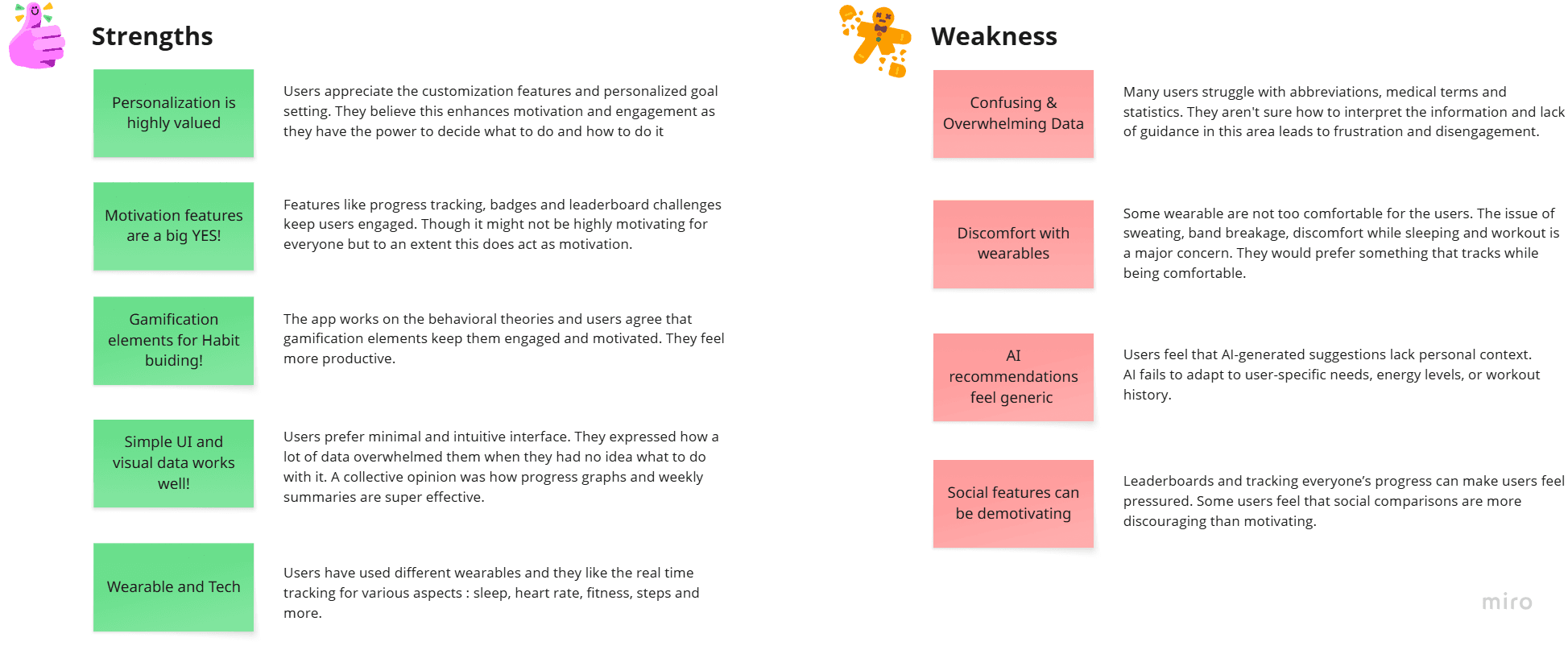
Personalisation is Expected, Not Optional
Users want customisable goals, notifications, insights, and tracking. AI feels “generic” unless recommendations adapt to context and progress
Comfort & Wearability Are Real Barriers
Devices often feel uncomfortable and durability + skin contact + movement friction affect willingness to use wearables
Motivation Is Personal, Not Universal
Some users rely on intrinsic motivation (progress, self-tracking) while ohers respond better to external drivers (challenges, accountability)
Empathize
Define
Ideate
Prototype
Test
WHAT WE SET OUT TO LEARN
To understand how people build and struggle to maintain fitness habits, I explored motivation, behaviour, wearable use contexts, and emotional responses to progress, feedback, and self-tracking.
RESEARCH METHODS
Semi-structured interviews with active and semi-active users
Affinity mapping and thematic analysis to synthesise patterns
Behaviour-science framing to evaluate motivation and consistency drivers
Impact Potential
Up to 3× higher habit consistency compared to reminder-only apps (behavioural research reference context)
Emotional reinforcement increases habit adherence by 80% over 6 months
Opportunity to support millions struggling with lifestyle-disease-linked habit drop-off
Key User Insights
Personalisation is Expected, Not Optional
Users want customisable goals, notifications, insights, and tracking. AI feels “generic” unless recommendations adapt to context and progress
Comfort & Wearability Are Real Barriers
Devices often feel uncomfortable and durability + skin contact + movement friction affect willingness to use wearables
Motivation Is Personal, Not Universal
Some users rely on intrinsic motivation (progress, self-tracking) while ohers respond better to external drivers (challenges, accountability)
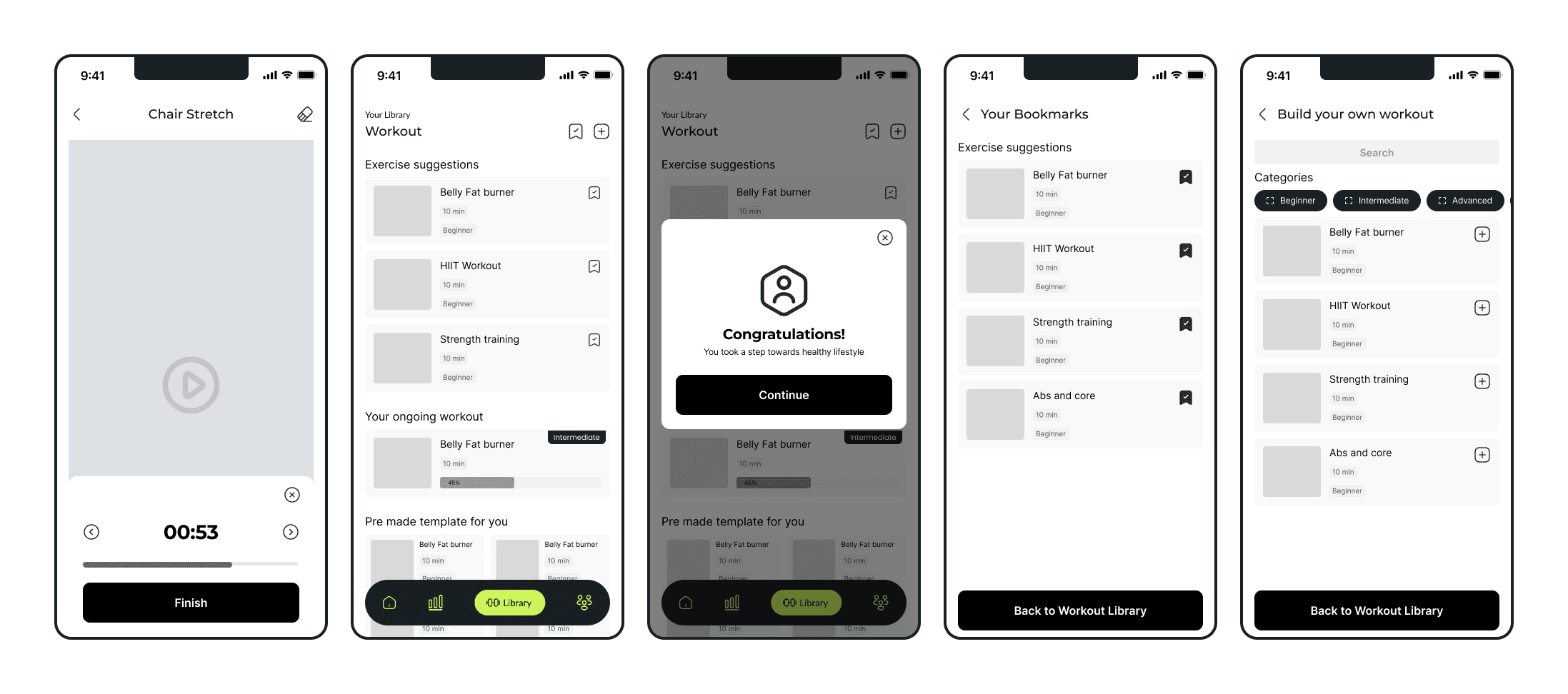
AI-Driven Habit Coaching
Learns your patterns and adapts habit plans to your motivation cycles.
Offers behavioral nudges at moments when you’re most likely to take action.
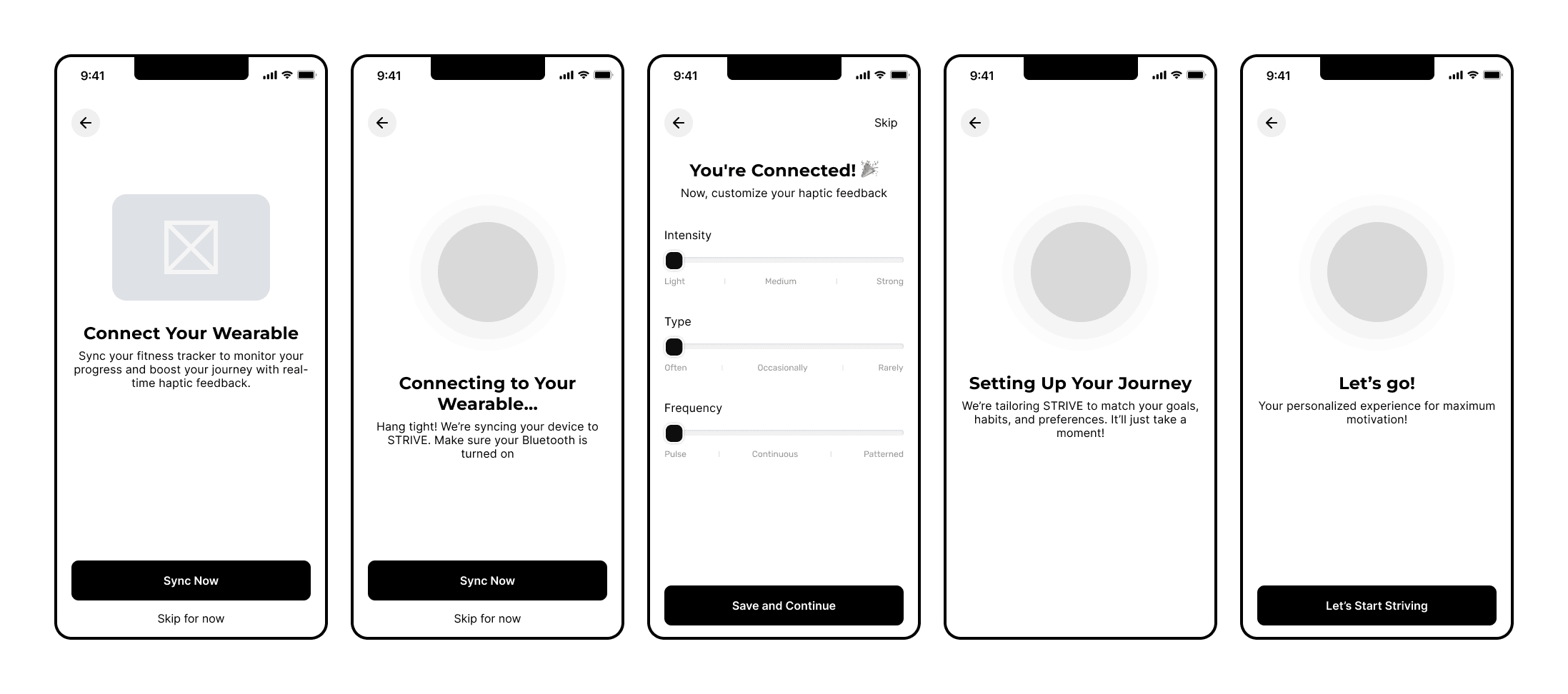
Haptic Feedback Ring
Delivers gentle vibrations to encourage action when motivation dips.
Reinforces “micro-rewards” in the brain through sensory feedback.
Emotional & Behavioral Insights
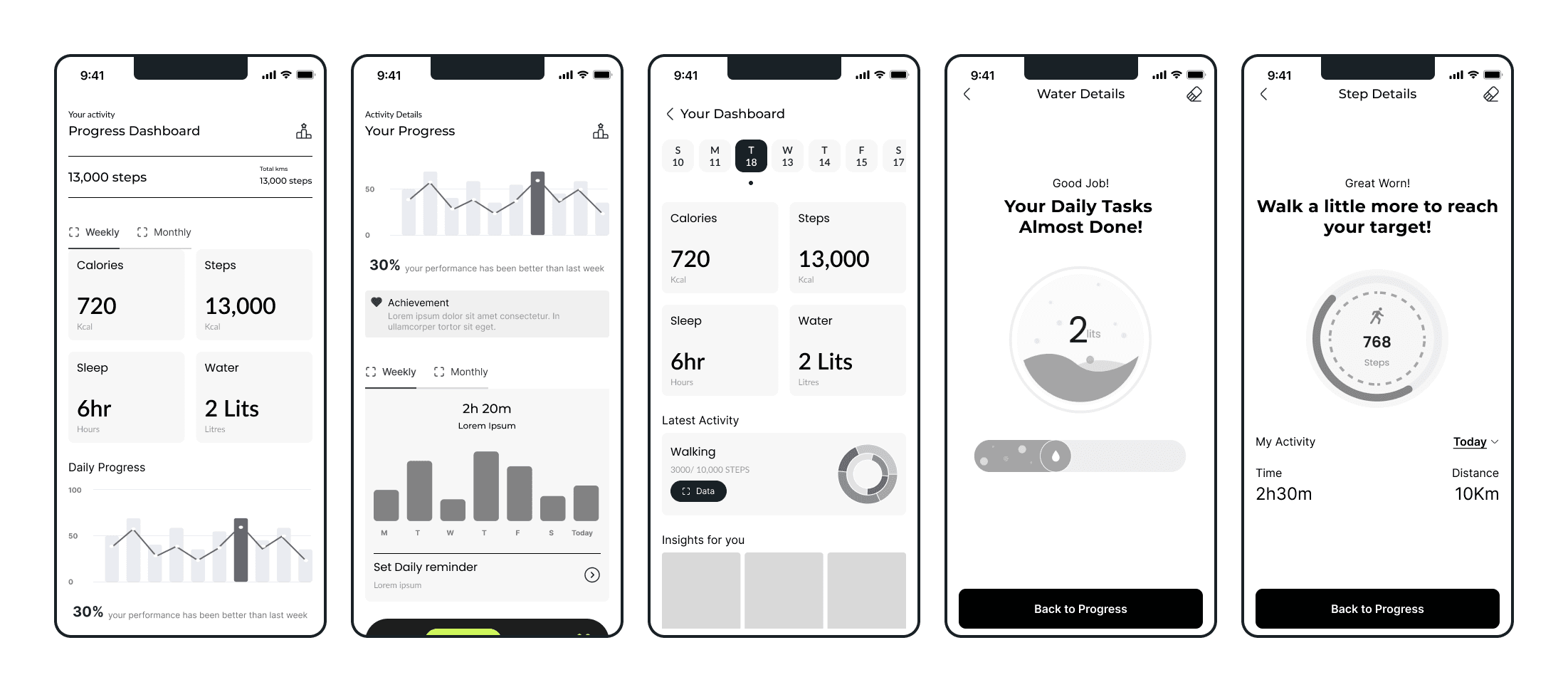
Tracks mood, energy, and habit performance to identify triggers.
Uses this data to recommend personalized habit loops.
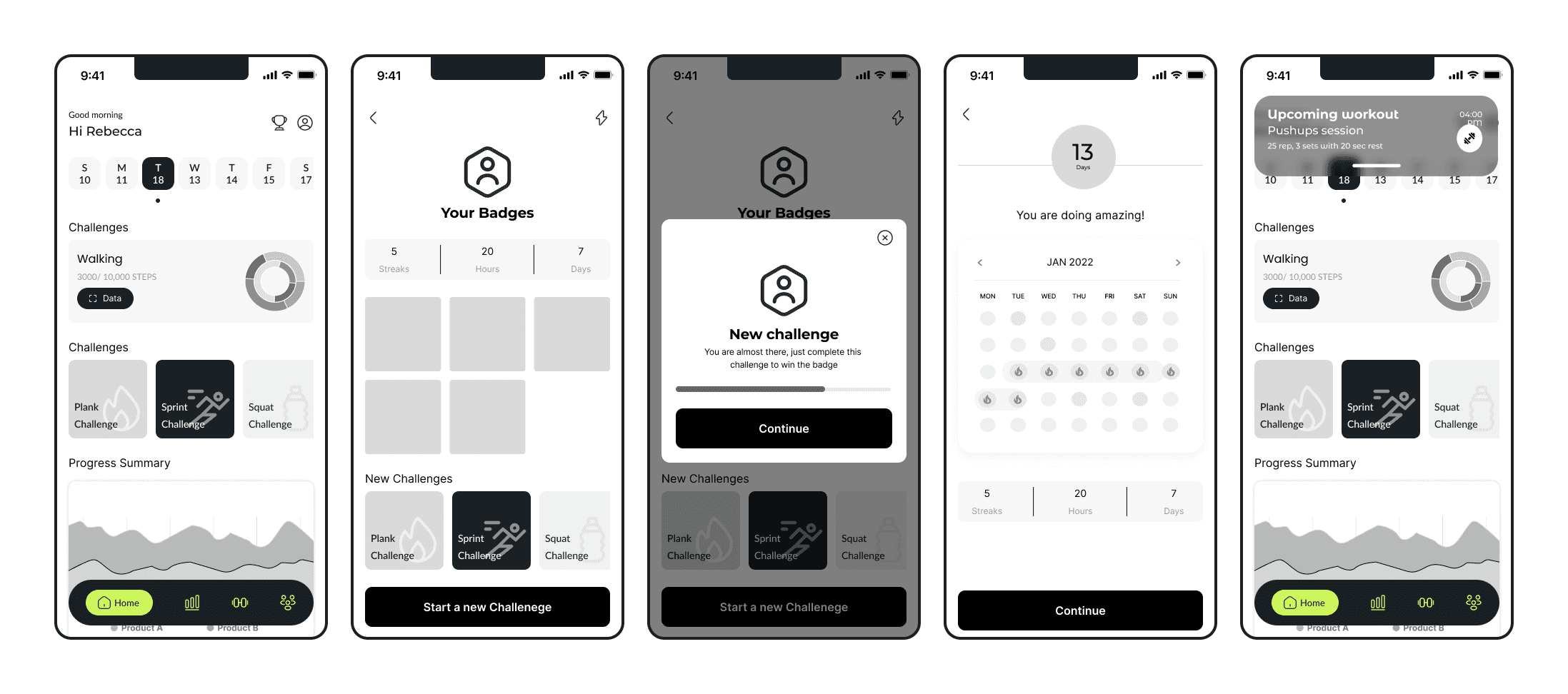
Gamified Progress & Social Motivation
AI-powered alerts for symptom flare-ups and potential risks.
Helps you act early, reducing both stress and long-term health complications.
FUELED BY PRODUCT THINKING, DESIGN SYSTEMS & CLARITY
Strive - Designing a Screen-Free, Haptic-First Fitness Experience
A design-thinking exploration of a screen-free, haptic-first fitness wearable built to reduce distraction and support real-world movement.
ABOUT THE PROJECT
Project Summary
STRIVE is an academic design-thinking project that explores how an AI-supported fitness app can reduce screen dependency and support behaviour change during real-world activity.
The primary focus of the project was the app experience including research, problem framing, and concept development, while the screen-free, haptic-guided wearable was introduced as a conceptual extension to reimagine interaction beyond visual interfaces.
Wearable = optional extension. The app works independently.
Why This Problem Matters
Today’s fitness tools are heavily screen-centric, even in contexts where screens disrupt focus or limit accessibility. This project explores how an AI-supported app can enable calmer, behaviour-led fitness guidance with minimal interaction designed to work independently, with a screen-free wearable introduced as an optional enhancement rather than a dependency.
66% of people fail to stick to new habits beyond 3 months.
Most habit apps focus only on reminders, ignoring emotional triggers and motivation dips.
Existing tools lack real-time, physical reinforcement leaving a gap between intention and action.
TECHNOLOGY USED
Design Thinking Process
Empathize
Define
Ideate
Prototype
Test
WHAT WE SET OUT TO LEARN
To understand how people build and struggle to maintain fitness habits, I explored motivation, behaviour, wearable use contexts, and emotional responses to progress, feedback, and self-tracking.
RESEARCH METHODS
Semi-structured interviews with active and semi-active users
Affinity mapping and thematic analysis to synthesise patterns
Behaviour-science framing to evaluate motivation and consistency drivers
Impact Potential
Up to 3× higher habit consistency compared to reminder-only apps (behavioural research reference context)
Emotional reinforcement increases habit adherence by 80% over 6 months
Opportunity to support millions struggling with lifestyle-disease-linked habit drop-off
Key User Insights
Personalisation is Expected, Not Optional
Users want customisable goals, notifications, insights, and tracking. AI feels “generic” unless recommendations adapt to context and progress
Comfort & Wearability Are Real Barriers
Devices often feel uncomfortable and durability + skin contact + movement friction affect willingness to use wearables
Motivation Is Personal, Not Universal
Some users rely on intrinsic motivation (progress, self-tracking) while ohers respond better to external drivers (challenges, accountability)
AI-Driven Habit Coaching
Learns your patterns and adapts habit plans to your motivation cycles.
Offers behavioral nudges at moments when you’re most likely to take action.
Haptic Feedback Ring
Delivers gentle vibrations to encourage action when motivation dips.
Reinforces “micro-rewards” in the brain through sensory feedback.
Emotional & Behavioral Insights
Tracks mood, energy, and habit performance to identify triggers.
Uses this data to recommend personalized habit loops.
Gamified Progress & Social Motivation
AI-powered alerts for symptom flare-ups and potential risks.
Helps you act early, reducing both stress and long-term health complications.